Abortion: The Bishops Speak

WASHINGTON, D.C., JUNE 25, 2010 (Zenit.org).- Direct abortion is never morally permissible, but there are some medical procedures that are legitimate to protect the life of a pregnant mother, even if they might result in the death of her child.

This clarification was made in a statement Wednesday by the U.S. bishops’ Committee on Doctrine.

The committee statement comes in response to a Nov. 5, 2009, abortion at a Catholic hospital in Arizona, which was later publicly judged as morally wrong by the city’s bishop, Thomas Olmstead.

The case brought national media attention, particularly because a nun working at the hospital supported the decision to perform the abortion. According to reports, the mother of the child was suffering from pulmonary hypertension, and the pregnancy was thus judged dangerous for her life.

Setting it straight

The bishops’ committee noted “confusion among the faithful” regarding the principles to be used to evaluate the case, and thus offered observations on the “distinction between medical procedures that cause direct abortions and those that may indirectly result in the death of an unborn child.”

The statement quoted the “Ethical and Religious Directive for Catholic Health Care Services” in No. 45, which condemns abortion, including abortions carried out in the first stage after the child is conceived.

The directive states: “Abortion — that is, the directly intended termination of pregnancy before viability or the directly intended destruction of a viable fetus — is never permitted. Every procedure whose sole immediate effect is the termination of pregnancy before viability is an abortion, which, in its moral context, includes the interval between conception and implantation of the embryo.”

Thus, the committee statement affirms, “Direct abortion is never morally permissible. One may never directly kill an innocent human being, no matter what the reason.”

The full statement is here.

Posted in Abortion, Catholic Moral Teaching, Pro life | Tagged , , , | Leave a comment

Help Desk 101: Just do It.

I  will not be posting much today. But here is a very funny video. Hey making a change is hard. We need help with the obvious. H/T black biretta

This is very funny even though it is in subtitles. Click on You Tube to get the full effect.

Posted in Humor, Uncategorized | Tagged , , | Leave a comment

It is Divine

The Liturgy that is.

The Vatican has approved a new translation of the Roman Missal, the text for the order of the Mass. It is closer to the original which is in Latin.  It is hoped that it will help us to enter into the divine mysteries in a deeper way.

The bad news is that those of us who participate in the Sunday Eucharist frequently will have to follow along in the missal until we memorize the new texts.

The good news is that those in the RCIA and new Catholics will share their pain with the old timers.

But I am  going to discuss the Liturgy in general instead of the changes in this thread. Sometimes we forget what the Eucharist—the Mass—is. Too often we forget that when we participate in the Mass, we are experiencing a foretaste of heaven. We are participating in the very life of God.

This is a great gift. Participation in the Sacraments is the ordinary way, for Catholics, that we enter into a relationship with God.  But it also entails a responsibility. We are given a mission to take what we receive, Jesus Christ, out into the world; to really live our faith.

I have to leave soon for a doctor’s appointment. But not without something to chew on. Archbishop Chaput of Denver, gave a talk yesterday in Chicago which the Archdiocese posted on line. He has some powerful things to say about God.

My fourth and final point is this: The liturgy is a school of sacrificial love. The law of our prayer should be the law of our life. Lex orandi, lex vivendi. We are to become the sacrifice we celebrate.

It is striking how many stories of the first Christian martyrs — especially the stories of bishops and priests — are told in what we might call a “Eucharistic key.” The classic is the martyrdom of the elderly bishop Polycarp. The whole account unfolds along the lines of a liturgy. Polycarp even delivers a long prayer that is modeled after the Eucharistic canon of the Mass.

Finally Polycarp asks, again echoing the prayer of the Mass: “May I be received this day … as a rich and acceptable sacrifice.” The account continues with his being roasted alive. The witnesses testify that they smell, not burning flesh, but the aroma of breaking bread.xi

The other classic example is St. Ignatius, the bishop of Antioch. In prison where he was awaiting his execution by being fed alive to dogs, he wrote: “God’s wheat I am, and by the teeth of wild beasts I am to be ground that I may prove to be Christ’s pure bread.”xii

But not only the martyrs should see themselves as a Eucharistic offering. You and I should do the same. So should every baptized believer. Again and again we read in the New Testament that we are all called to offer ourselves to God as a living sacrifice of praise, that we are to make ourselves a perfect offering, holy and acceptable to God.xiii

This is a foundation stone to the Catholic belief in the priesthood of all the baptized. The early Christians believed they were heirs to the vocation given to Israel—to be a “chosen race, a royal priesthood, a holy nation.”  By the priesthood of our lives, all baptized believers are to offer, not the blood-sacrifice of animals, but the sacrifice of our hearts, the symbol of our lives, in imitation of Jesus Christ.

We make our sacrifice of praise first and foremost in the Eucharist. This is the meaning behind the council’s call for the “active participation” of the laity in the liturgy.xv This expression unfortunately has been taken as a license for all sorts of external activity, commotion and busy-ness in our worship. That’s not at all what Vatican II had in mind.

“Active participation” refers to the inner movement of our souls, our interior participation in Christ’s action of offering of his Body and Blood. This requires silent spaces and “pauses” in our worship, in which we can collect our emotions and thoughts, and make a conscious act of self-dedication. We are to “lift up our hearts,” and in contrition and humility place them on the altar along with the bread and wine.

But our work does not stop in the Mass.

Everything in our days — our work, our sufferings, our prayer, our ministries — everything we do and experience is meant to be offered to God as a spiritual sacrifice.  All of our work for the unborn child, the poor and the disabled; all of our work for immigration justice and the dignity of marriage and the family: All of it should be offered for the praise and glory of God’s name and for the salvation of our brothers and sisters.

This is another great teaching of the council that we have yet to integrate into ordinary Catholic spirituality. In Lumen Gentium, the council taught that all our works “together with the offering of the Lord’s Body … are most fittingly offered in the celebration of the Eucharist. Thus, as those everywhere who adore in holy activity, the laity consecrate the world itself to God.”xvi

All that we do — in the liturgy and in our life in the world — is meant to be in the service of consecrating this world to God.

(snip)

The liturgical act becomes possible for modern man when you make your lives a liturgy, when you live your lives liturgically — as an offering to God in thanksgiving and praise for his gifts and salvation. You are the future of the liturgical renewal.

The liturgical act becomes possible for modern man when you see your lives and work in light of God’s plan for the world, in light of his desire that all men and women be saved and come to the knowledge of the truth.xvii

The mystery we celebrate with the angels and the saints must take root deep in our lives and personalities. It must bear fruit. Each of us must make our own unique contribution to God’s loving plan — that all creation become adoration and sacrifice in praise of him.

Thank you for your attention tonight.  And it’s fitting that we should conclude and go forth in the words of one of the new dismissal prayers of the new Roman Missal. So let our prayer for each other tonight be this: “Go in peace, glorifying the Lord by your life.”

Enjoy. Read the whole thing here.

Posted in Echarist, Mass | Tagged , , , , | 1 Comment

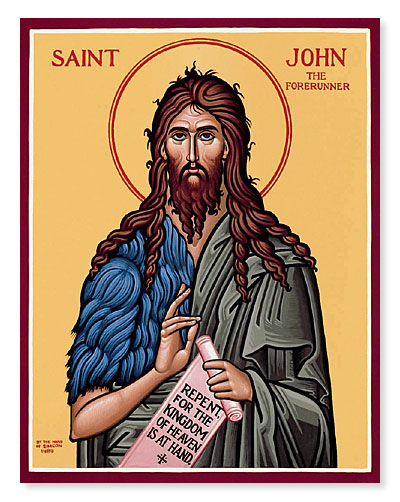
Happy Birthday St. John the Baptist

Monsignor Pope has a great post on St. John the Baptist:

On this feast of the Birth of St. John the Baptist we celebrate the Birth of the final Prophet of the Old Testament. He stood at the culmination of the Old Covenant and emphatically pointed to the New. He drew back the curtain on all that that the ancient prophets longed to see. His birth is a great harbinger of a new epoch, the final age of Man. When he points to Christ and then steps back, we see the Old Covenant yield to the new. One era is ending another is beginning. This birthday bespeaks a coming sea change, something is ending, something greater is beginning. Types, symbols and shadows are about to give way to true reality they signified.

A great and dramatic moment in this Old giving way to the New occurs when the two meet by the riverside. (It is true, they had already met in utero, as Mary and Elizabeth shared company. John prefigured this riverside meeting by dancing for joy in his mother’s womb at the nearness of Christ). But the drama of this moment at the riverside cannot be overestimated for John supplies a strange and wonderful answer to a question asked 2,000 years before. And the answer he supplies to this question signals that the new has arrived.

Read the whole thing here.

Posted in Saints | Tagged , , | Leave a comment

Do Catholics Worship Mary and the Saints?

Do Catholics Worship Mary? Saints?

No, But our statues do.

H/T. Patrick Madrid.  Patrick is a Catholic writer and apologist. During an apologetics seminar in Chicago, he told of seeing the statue that I have embedded to the right. He quipped:

“What a great religion Catholicism is! Not only can we worship statues, but our statues can worship statues.”

The Catholics in attendance laughed at this common misconception; but the Protestants did not.

Catholics worship God and God alone. But many Protestants  really do think that we worship Mary and the Saints. Some understand that we don’t worship Mary and the saints but they don’t understand why we ask them to pray for us Many don’t understand the honor given to Mary as the Mother of God.

Saints are people who lived lives of heroic virtue. They cultivated holiness while on earth. Now that they are in heaven, they are in perfect communion with God the Father, Son and Holy Spirit. They are more alive than we are!

Mary, because she is the Mother of God is given the highest honor.

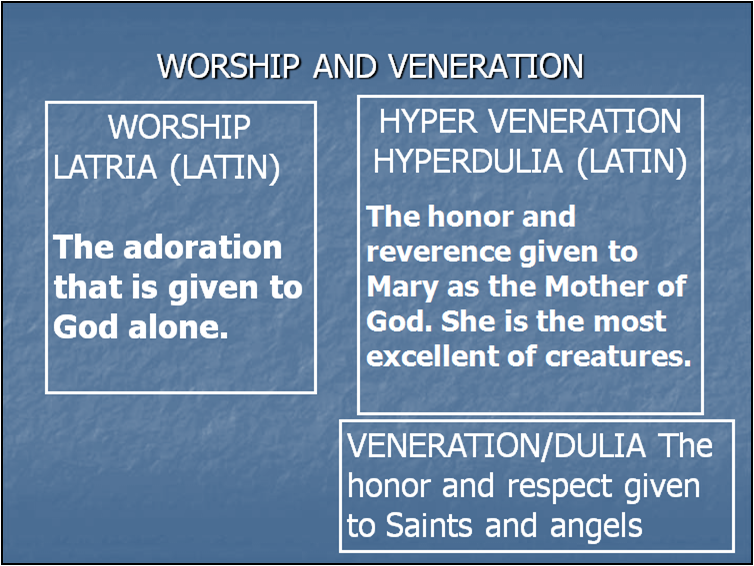
Worship and adoration are only Given to God. Mary and the Saints are not gods or minor deities. They are part of God’s creation; they are creatures. We venerate Mary and the Saints.

Worship vs. Veneration

Worship. The Latin word for worship is latria which means service. In Christianity it means the worship and adoration that is reserved for God. 

Hyper Veneration. The Latin word is hyperdulia. This is the honor or reverence that is given to the Blessed Mother. She is given a higher degree of honor, as the Mother of Jesus, than the Saints.

Veneration. The Latin term is Dulia. It is the honor or reverence that we give to the Angels and Saints. Veneration just means to regard with great respect.

Worship is different in kind, and not just degree, from hyper veneration and veneration.

Why Do Catholics Pray to Mary and the Saints?

We pray to them because they are friends of God. It is not an act of worship.  We ask the Saints to pray that God will hear our prayers.  Most Protestants do not have a problem asking their friends to pray for them.

Asking Mary and the Saints to pray for us is the same concept. The Saints in heaven, the souls in purgatory, and those of us here on earth are all part of the communion of saints. The communion of saints is the Church.

It is important to remember that all prayer is through Christ. Jesus Christ is the one mediator between God and man.

Posted in Apologetics, Saints | Tagged , , , | 16 Comments

Cool Catholic Stuff

The oldest known image of the apostles Andrew and John have been discovered in catacombs under the city of Rome, dating back to the 4th century A.D., archaeologists announced Tuesday.

The paintings were found in the same location where the oldest known painting of St. Paul was discovered last year, the Pontifical Commission for Sacred Archeology said Tuesday.

Find it here:  http://religion.blogs.cnn.com/2010/06/22/vatican-oldest-known-images-of-apostles-andrew-and-john-found/

Posted in Uncategorized | Tagged , | 4 Comments

Ice Skating Priests

I think that we need a wee break from the serious stuff. This is old, but it still gives me a chuckle. An add from Stella beer.

Posted in Humor | Tagged , , | 3 Comments

Truth and Love

From the comment section on Home to Rome Jim writes:
“In the United Church of Christ we say that “No Matter who you are or where you are on the Faith Journey, you are welcome here.” This guy is clearly in an important time in his faith journey. It is my hope that this is good for him and draws him closer to Christ and the fullness of living the faith. The greatest commandment is about love and not truth. Each person must find their way to live in the fullness of God’s love. I agree that you can’t be a Christian without a community of faith. The Roman Catholic Church offers a very structured community for those whose faith journey needs that kind of support to sort out the many questions of faith and life. I will pray for David on this next chapter in his faith journey. I celebrate the many communities of faith that support people in living the fullness of their Christian faith. I have found that community of faith in the United Church of Christ that has helped me on my faith journey.”

Catholics share much with our separated brothers and sisters; many are good and holy people. But Jim, as you know, we believe that the fullness of the Christian faith is found in the Catholic Church. She is the Church established by Jesus Christ. The only one (except for the Orthodox schism—which is different) until the 16th century.

It is tragic that Jesus prayed that we all be one, but we are a more and more divided people. The Body of Christ is fractured.

And all are indeed welcome in the Catholic Church. If you attended Mass on a typical Sunday you will find rich, middle class, poor, homeless people; black, brown, white; Caucasians, Hispanics, Asians, the young, the old, the well, the sick, the weary etc.

I for one will always move down the pew for one more sinner. We are all unfinished Christians.

Please don’t try to reduce my faith to a matter of needing support. I am a Catholic, because I believe, after nearly twenty years of studying, that the Church is true.  As for support, every human being is utterly dependent on God whether we know it or not.

All, faith, all grace, all hope comes from God as a free and unearned gift.

The greatest commandment is love. The vocation of every Christian is to love God and our neighbor.  Absolutely.

But Christian love is more than a feeling or a sentiment. It involves the head as well as the heart. It involves Orthodoxy (right thinking); Orthopraxy (right doing); and Orthopathy (right feeling).

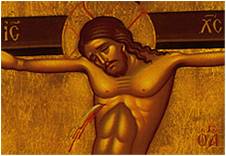
The kind of love that we are called to is self-giving, sacrificial love. Jesus, by dying on the cross modeled perfect love for us. That is what real love is. You know the kind of love that resulted in all but one of the Apostles being martyred. It is the kind of love that resulted in many martyrs in the early Church until the Edict of Milan in 313.

Martyrs die for the truth, because they love.

Pope Benedict in his first encyclical, God is love, said:

…..Love embraces the whole of existence in each of its dimensions, including the dimension of time. It could hardly be otherwise, since its promise looks towards its definitive goal: love looks to the eternal. Love is indeed “ecstasy”, not in the sense of a moment of intoxication, but rather as a journey, an ongoing exodus out of the closed inward-looking self towards its liberation through self-giving, and thus towards authentic self-discovery and indeed the discovery of God: “Whoever seeks to gain his life will lose it, but whoever loses his life will preserve it” (Lk 17:33), as Jesus says throughout the Gospels (cf. Mt 10:39; 16:25; MkLk 9:24; Jn 12:25). In these words, Jesus portrays his own path, which leads through the Cross to the Resurrection: the path of the grain of wheat that falls to the ground and dies, and in this way bears much fruit. Starting from the depths of his own sacrifice and of the love that reaches fulfillment therein, he also portrays in these words the essence of love and indeed of human life itself. 8:35;

We are  called to love in truth.  It is not an either or choice.  We are called to bear witness to the truth.  Remember that Jesus revealed to us that he is the Truth. The CCC states.

2465 The Old Testament attests that God is the source of all truth. His Word is truth. His Law is truth. His “faithfulness endures to all generations.” Since God is “true,” the members of his people are called to live in the truth.

2466 In Jesus Christ, the whole of God’s truth has been made manifest. “Full of grace and truth,” he came as the “light of the world,” he is the Truth. “Whoever believes in me may not remain in darkness.” The disciple of Jesus continues in his word so as to know “the truth [that] will make you free” and that sanctifies. To follow Jesus is to live in “the Spirit of truth,” whom the Father sends in his name and who leads “into all the truth.“To his disciples Jesus teaches the unconditional love of truth: “Let what you say be simply ‘Yes or No.'”

Love comes from Jesus. Love comes from Truth. The pierced side of Christ is where we can begin to understand truth. It is where we learn the definition of love. To love is to die to self and become another Christ. Period

We simply cannot love if we do not live in truth. As Christians we cannot resort to Pilot’s question, which is also an answer, What is Truth?

Jesus is the answer to the question.

Posted in Apologetics, Truth | Tagged , , | 2 Comments

Saints Alive!

Oh my!  We celebrate the feast day of three Saints:

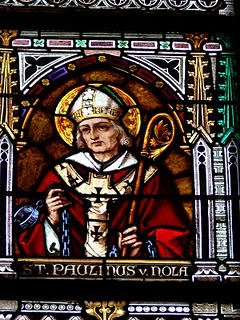
St. Paulinus Of Nola, Bishop died in 431. You can read about him here http://www.catholic.org/saints/saint.php?saint_id=5329

St. John Fisher

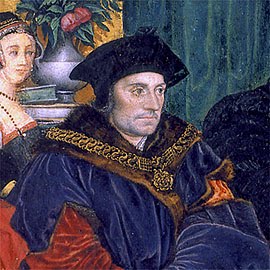
It is also the feast day of the great martyrs St. John Fisher, and St. Thomas Moore. They were both beheaded in 1535 by King Henry VIII because they refused to disobey the Pope and allow him to divorce and re-marry.

We know the most about St. More because of his letters, and the movie “A Man for All Seasons” (clip embedded below).

St. Thomas More

The Martyrs are models of Christian discipleship and love for God.  In a letter to his daughter , Meg, St. Thomas More wrote from prison:

I will not mistrust him, Meg, though I shall feel myself weakening and on the verge of being overcome with fear. I shall remember how Saint Peter at a blast of wind began to sink because of his lack of faith, and I shall do as he did: call upon Christ and pray to him for help. And then I trust he shall place his holy hand on me and in the stormy seas hold me up from drowning.

And finally, Margaret, I know this well: that without my fault he will not let me be lost. I shall, therefore, with good hope commit myself wholly to him. And if he permits me to perish for my faults, then I shall serve as praise for his justice. But in good faith, Meg, I trust that his tender pity shall keep my poor soul safe and make me commend his mercy.

And, therefore, my own good daughter, do not let your mind be troubled over anything that shall happen to me in this world. Nothing can come but what God wills. And I am very sure that whatever that be, however bad it may seem, it shall indeed be the best. (Office of Readings June 22)

Read more here: http://www.crossroadsinitiative.com/library_article/950/Letter_of_St_Thomas_More_to_His_Daughter_Margaret.html

Here is a scene from A Man for All Seasons a movie about St. Thomas More:

Prayer (From the Office of Readings)

Father,

You confirm the true faith

With the crown of martyrdom.

May the prayers of Saints John fisher and Thomas More

Give us the courage to proclaim our faith

By the witness of our lives.

Grant this through our Lord Jesus Christ your Son who lives and reigns with you and the Holy Spirit, one God forever and ever. Amen


Posted in Saints | Tagged , , , | 3 Comments

Brave New World:Designer Babies

Did you know that there is an online dating service for Beautiful people? http://www.beautifulpeople.com/index/en

In order to become a member you have to be voted in by members. The criteria for membership?   Members vote on whether or not they think that the applicant is beautiful.  But hey it is democratic!

For a Christian, true beauty is not just skin deep. All human beings are created by God in the image and likeness of God.  The human body, is indeed wonderful and sacred, but the Church warns that respect for the body can be taken to extremes:

“If morality requires respect for the life of the body, it does not make it an absolute value. It rejects a neo-pagan notion that tends to promote the cult of the body, to sacrifice everything for its sake, to idolize physical perfection and success at sports. By its selective preference of the strong over the weak, such a conception can lead to the perversion of human relationships.” (CCC #2289)

But it gets worse. Beautifulpeople.com has just released a press release. (Hey I go down these rabbit holes so you don’t have to).

NEW YORK, June 21 /CHICAGOPRESSRELEASE.COM/ — www.BeautifulPeople.com, the dating site with a strict ban on ugly people, has launched a virtual sperm and egg bank for people who want to have beautiful babies.

The Beautiful Baby service – which is also available to non-members – was created for people who want to maximize their chances of having good looking children.

Managing director Greg Hodge said: “BeautifulPeople.com has launched a fertility introduction service to help members and non-members alike procreate.  There are no financial benefits for us in doing so – we are simply responding to a demand for attractive donors.  Every parent would like their child to be blessed with many fine attributes, attractiveness being one of the most sought after.  For a site with members who resemble Brad Pitt, George Clooney and Angelina Jolie you can imagine the demand.”

Founder Robert Hintze added: “Initially, we hesitated to widen the offering to non-beautiful people.  But everyone – including ugly people – would like to bring good looking children in to the world, and we can’t be selfish with our attractive gene pool.”

Since its creation in 2002, BeautifulPeople.com has become the world’s largest community of beautiful people with over 600,000 members from 190 countries.

Read more here: http://chicagopressrelease.com/press-releases/beautifulpeople-com-launches-virtual-sperm-bank

Wow how benevolent of them.  They decided out of the goodness of their um beautiful hearts to allow “ugly people” to have access to beautiful DNA.  Aren’t they special.  meh.

Brave New world: we are there. I wrote about this earlier. You can find the post here: .  https://adeaconswife.wordpress.com/2010/05/18/brave-new-word-children-as-products/

I have nothing but compassion for couples who bear the heavy cross of infertility. I can understand how faithful Catholics might be tempted by the promise of morally prohibited fertility treatments such as In Vitriol Fertilization.

But to consciously decide to design your child based on certain criteria, beauty, intelligence, athletic ability e.g., is just beyond the pale.

In Sacred Scripture, children are gifts and a sign of God’s blessing. Increasingly, in our brave new culture, children are products designed and produced by scientists and technicians.

If most future children, due to genetic selection and/or manipulation, are all potentially perfect, how will that affect people who are not so beautiful, intelligent, athletic, or powerful?

Will the less than perfect be marginalized? Discriminated against?

Sometimes I wonder what God was thinking when, out of absolute love, he gave us free will.

Posted in Moral Theology, Pro life | Tagged , , , , | 3 Comments