Philosopher’s new book appeals to reason alone to make pro-life case

Via New Advent.

Catholic News Agency reports that Doctor Christopher Kaczor, a professor of philosophy, has a new book out where he argues the pro life position from reason without appealing to religious or theological arguments.

Excerpt

Instead of appealing to religious authority or an instinctive sense of outrage, Kaczor has sought to examine the arguments for abortion with painstaking care – in order to point out flawed premises, logical inconsistencies, or absurd results.

“I appeal only to reason, science, and history in making a case that abortion is morally wrong,” he explained. “I’ve tried to be as comprehensive as possible. Over the course of about 10 years in writing this book, I tried to take into account every major argument given in favor of abortion and then to counter it.”

One of the arguments he counters is made by Professor David Boonin of the University of Colorado, in his book “A Defense of Abortion.” Boonin holds that it is wrong to kill most individuals because it thwarts their desire to live. Boonin denies the presence of any kind of “desire” before the 25th week of fetal development – and says, therefore, that abortion before this point cannot be an injustice.

But this argument, Kaczor said, would justify several things its proponents are unlikely to approve of – including a right to kill many premature infants outside the womb, or to take the lives of depressed or brainwashed individuals who claim to have no desire to live. Read more here.

Dr. Kaczor’s book sounds interesting. I would love to read it, but it a bit pricey for me right now–even the Kindle version.

Posted in Abortion, Pro life | Tagged , , , | 2 Comments

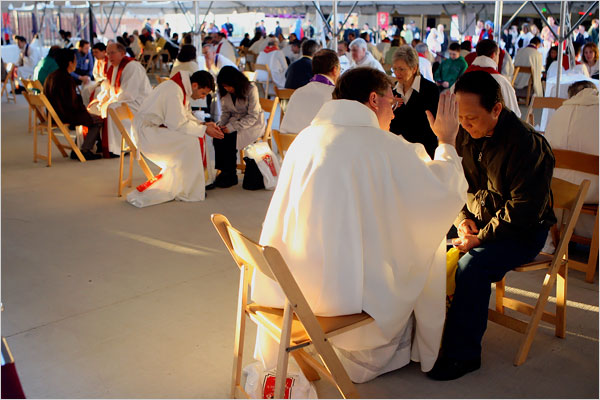
Shaw: Contraception one reason for Catholic flight from confession

Russell Shaw of Our Sunday Visitor thinks that  one of the reasons Catholics avoid confession is because they are pro contraception.

Excerpt

This year as in other recent Lents, dioceses and parishes across the country are making a push to get Catholics back to this neglected sacrament. I wish them much success. The flight from sacramental penance has been one of the genuine disasters of contemporary Catholic life.

What explains it? Many things undoubtedly combine to play a part: an often-cited loss of the sense of sin, fatuous presumption that God approves of me no matter what, shame at the prospect of confessing one’s sins after a long time (give it a try: It won’t hurt). But part of it, I feel certain, has to do with contraception.

It works this way.

Last time I looked, the surveys were reporting that something like eight out of 10 American Catholics said they thought contraception was OK and the Church was wrong about it. Obviously this includes many of childbearing, child-rearing age who are practicing contraception now.

As far as the Sacrament of Penance is concerned, these people don’t want to confess contraception because they believe — or anyway say they believe — it isn’t wrong, and they don’t care to give it up. But they don’t want not to confess it since they know perfectly well that the Church says something different, so not confessing would be, well, kind of dishonest. The non-solution to the dilemma is not to receive the sacrament at all. Which is where we are now. “  Read more here.

Hmm. I don’t really think that contraception is a reason people avoid confession.  As a deacon’s wife I have listened to many people in the pews and I have never heard that given as a reason. It is only in recent years that the clergy have been encouraging people to go to confession and to offer it on a regular and frequent basis. Consequently people have not gone to confession for many years. It can be intimidating to return to the sacrament.

Also I do see signs that Catholics are embracing the Sacrament.

What do you think? Why do people avoid the Sacrament?

Posted in Sacraments | Tagged , | 4 Comments

Confession and the Lost Son

Chapter 15 of the Gospel of Luke consists of three Parables: The parable of the Lost Sheep, the lost Coin and the lost Son.   The “moral” of these stories is that God rejoices when sinners repent.  All of Heaven rejoices!

God’s mercy for sinners goes beyond our ability to understand. Many people would say “how dumb to leave a whole flock of sheep to go after one; what a waste of time and energy for a woman to search her house for one measly coin.  Gee what a gullible Father to take back such a useless son—and throw him a party!!  The younger son wasted his inheritance and turned his back on God and his people to live with pagans!!   He spent all of the father’s hard earned money on wine, woman, and gambling. Certainly most parents today would take such a son back—but throw him a huge party. Are you kidding?

Did you catch the most amazing verse in the parable of the lost son? “While he was still a long way off, his father caught sight of him, and he was filled with compassion.  The father ran to his son and he embraced and kissed him.” Wow. The father was watching for his son’s return.

Now that would be very unusual for a Jewish Father in this situation.  The son had demanded his inheritance while his father was alive. This son had freely decided to break his relationship with his father—with his family. Even worse he freely decided to break God’s law. He chose to exile himself. When he had squandered his inheritance he took a job tending pigs. This was against God’s ordinances. It made him unclean—outside the law. He was a big time sinner. This young man had broken the Covenant with God. He had severed his relationship with God and with his earthly father.

A Jewish father would have not have been looking for his son’s return. The son, by choosing to go against God, had cut himself off permanently from his father and his family. This son was dead to his family.

Yet this Father was watching for his return. When he saw him way out in the distance, the father ran to meet his son—not a very dignified thing for a Jewish Patriarch of that time to do.  It was such an unbelievable thing to do that the elder son couldn’t believe it, and he refused to acknowledge the lost son as his brother.  He refuses to call him brother despite his father’s pleading. He calls him (to his father) Your Son. Not my brother.

Of course, the Father in the parable is God. He wants us to repent—turn back from sin—to go through a conversion of heart. He is watching for us to return to God’s family. When we do there is great rejoicing in heaven. God wants us to turn away from sin and enter into a new life with him. A life lived in the trinity of God the Father, Son, and Holy Spirit. That is where our joy is.

God loves us. His love and mercy are incomprehensible. We can only understand the agape love (agape is the word used in the NT) that God has for us through the Cross. Agape love is a complete emptying of self, of giving to other, of sacrifice. It is the kind of love that Jesus taught us by dying on the cross to save us from our sins.

Conversion to a new life is the pre-requisite for finding joy in a new life in Christ. The father in the parable gives his son a beautiful robe, a ring, and an extravagant feast. With these symbols, the son’s inheritance has been restored.  He has been reconciled with his family, and there is much rejoicing in his father’s house.

That is why Jesus gave us the Sacrament of Penance and Reconciliation. He wants us to be truly free! He wants to free us from the slavery of sin. He wants us to live a life of abundance—of pure joy!

Sin harms our relationship with God. It distances our selves from our Father in heaven.

Sin hurts us too. We are all broken and scared by sin.  That is why this is one of two Sacraments of healing. Have you ever noticed that in the Gospels, when Jesus heals someone he almost always forgives their sins. Jesus heals the body as well as the soul. He restores a sick and broken body to wholeness, and he restores a broken spirit to holiness.

He restores the ruptured relationship between us and God. When we sin we harm ourselves.  In addition, when one member of the body of Christ sins—all Christians are affected. Sickness and death are a reality because sin entered the world. Our first parents chose to let it in. It is not our natural state.

God created humans to be body and soul. Our bodies are not just on loan to get around the earth a bit easier. We believe that at the end of the world, our bodies will be resurrected. It is in the Apostle’s Creed: We believe in…the resurrection of the body.

Confession and repentance are the remedies for sin. So we have this wonderful Sacrament that Jesus himself gave us, and it is underused.  That is a sad reality.  But then it is tragic that too often we take all of the Sacraments for granted.

Why did I say that it is a tragedy that we under use and under value the Sacraments?  Sacraments are real actual encounters with God through Jesus and the actions of the Holy Spirit.  We say that they are signs pointing to a reality. They are also called symbols, but not in the secular meaning of symbol. Symbol in theological language means to put together—to unite man and God.  So Jesus is truly present in the consecrated bread and wine. The opposite is diabolic which means to pull apart.

So Sacraments are not magic spells, or rituals, or nice blessings. They are where we meet God. Really. Heaven and earth touch. God uses material things water, wine, bread, oil to be with us. We are embodied souls. So he touches us in a physical way. The incarnation– God becoming man—true God and true man—to reveal himself to us is at the heart of the Sacramental life of the Church.

This is all really nice you might be thinking.  But why do we need to confess our sins to a Priest? Well for one thing, Jesus gave the apostles the power to forgive sins. Catholics are required to go to confession for all grave—mortal sins before receiving Eucharist. This is because mortal sin severs our relationship with God. Venial sins hurt our relationship. They cause a gap between God and us. In addition it is one of the precepts of the Church that we must go to Confession once a year for grave sins..

Another important reason is that God calls us to have a real relationship with him through his son Jesus Christ.  In our relationship with others, we need to apologize in person with words. It is the same with God. The Priest represents Jesus Christ.  We apologize to Jesus when we go to Confession.

We are called to live a life of holiness. This means answering the radical demands of the gospel and the Ten Commandments.  In order to do this we have to strive to avoid sin. To live a holy life, in other words, does not mean just doing what is socially acceptable.  Christians cannot think that if everyone else is doing it that it is okay. Holiness is beyond being good. Christians are called to be on a true quest for holiness.

But sin gets in the way. Even saints sinned. The difference is that they lived holy lives. They confessed their sins and turned back to God.  This is the way to heaven. Eternity is a long time. We can choose to live it in hell or we can choose a place at the heavenly banquet—the heavenly feast.

We can choose an eternity that is miserable, or we can choose one of endless joy.

Picture it. God is waiting outside the Confessional.  He sees you coming and runs to meet you eager to embrace you and take you back into the family.  Are you ready to begin the journey?

Link: The Light is On for You from the Archdiocese of Washington (DC).

Posted in Sacraments | Tagged , | 1 Comment

Look Through the Priest and See Jesus

Fr. Dwight Longenecker, commenting on Fr. Corapi, offers much food for thought.  Although we do not know if the accusations against Fr. Corapi are true, we should be careful not to put Priests on pedestals. Yes they represent Christ, but they are human. Becoming another Christ is something that Priests have to grow into.

Fr. Longenecker has some sound advice for all of us.

Excerpt

What’s to learn from it? Simple lessons really. First of all, don’t believe what you see. Even the  best holy man has got a shadow side. The good ones admit it. Secondly, just because of this don’t drift into cynicism. You weren’t supposed to put your trust in those guys anyway. You were supposed to look through them to see Jesus. Thirdly, while you don’t believe what you see, still strive to think the best. Don’t idolize that priest, but don’t cast him away either. He’s a real man. He has faults and foibles and sins and secrets….just like you. Try to love him for that and not for how good you think he is at his job.  Most of all, look to Jesus, the author and finisher of our faith.

Putting your trust in a priest–not matter how wonderful he is–will always be a let down. Furthermore, it’s an immature thing to do. Too often instead of doing the hard work of becoming saints ourselves we idolize someone who has become a saint or who we think is a saint. That’s shallow and too easy. It’s like a religious form of those teenage girls who scream and cry and faint when they see their boy pop idol. They mistake their own immature high octane emotions for real love. Likewise, when religious people idolize their parish priest or some media star they often mistake their love and admiration for that person for real religious emotion and fervor.

Read the entire post here.

Posted in Church Scandal, Clergy | Tagged , | 1 Comment

Fr. Corapi placed on administrative leave amidst accusations

Fr. Corapi is a popular speaker who has a show on EWTN. While I have never heard him speak or watched his show (I prefer to read), he has brought many people into our RCIA.

I pray that the accusations are false. The blog Te Deum Laudamus has the story with links to other bloggers.

“Fr. Corapi, well known for his catechism videos and talks has been placed on administrative leave.  Here is the statement from his website:”
A Call for Prayer

On Ash Wednesday I learned that a former employee sent a three-page letter to several bishops accusing me of everything from drug addiction to multiple sexual exploits with her and several other adult women. There seems to no longer be the need for a complaint to be deemed “credible” in order for Church authorities to pull the trigger on the Church’s procedure, which was in recent years crafted to respond to cases of the sexual abuse of minors. I am not accused of that, but it seems, once again, that they now don’t have to deem the complaint to be credible or not, and it is being applied broadly to respond to all complaints. I have been placed on “administrative leave” as the result of this.

I’ll certainly cooperate with the process, but personally believe that it is seriously flawed, and is tantamount to treating the priest as guilty “just in case”, then through the process determining if he is innocent. The resultant damage to the accused is immediate, irreparable, and serious, especially for someone like myself, since I am so well known. I am not alone in this assessment, as multiple canon lawyers and civil and criminal attorneys have stated publicly that the procedure does grave damage to the accused from the outset, regardless of rhetoric denying this, and has little regard for any form of meaningful due process.

All of the allegations in the complaint are false, and I ask you to pray for all concerned.

Read more here.


Posted in Catholic Church Scandals | Tagged , | 4 Comments

Second Sunday in Lent

Readings: Genesis 12:1-4,Psalm 33:4-5,18-20, 22;2 Timothy 1:8-10;Matthew 17:1-9

A reflection.

In the first reading, the elderly Abram (who will become Abraham) is called by God to leave his country and everything he knows for an unknown and far off land.  Abram begins his journey of faith trusting that God will keep his promises of blessings to Abram.  Although Abram must have wondered how God was going to make him a great nation, that his name would become great, and that all people would receive blessings from him, Abram never questioned the Lord. He just went.

Like Abram we are on a forty day spiritual journey. We are not really sure where God is leading us or where we will end up. But we struggle to hear God’s voice as we strive to answer God’s call to live holy lives.

We do know, in the words of the psalm, that “Upright is the word of the LORD.”  Confident that God is merciful and trustworthy we proceed on our Lenten journey.

But we know that the journey will not be easy. Proclaiming the Gospel and striving for holiness involves suffering and struggle. It is only through the grace of Jesus Christ that we can have the strength to endure. We can endure because we know that if we persevere we will become like Christ in all of his glory.

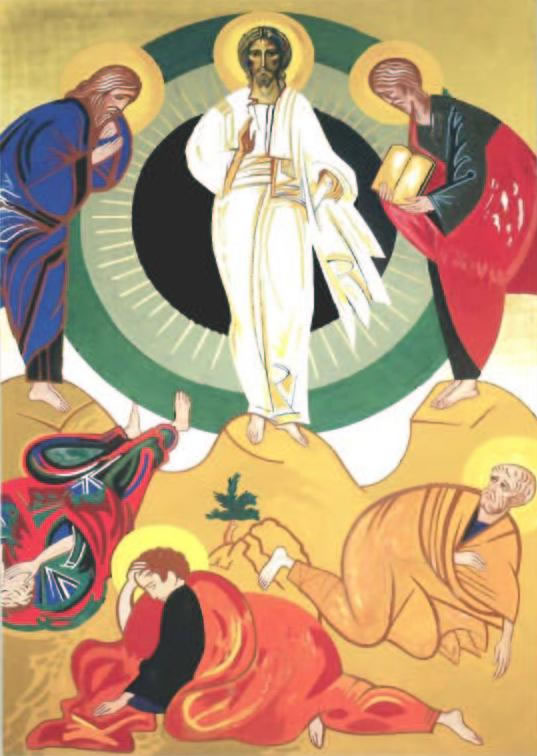
In the Gospel Peter, James, and John get a glimpse of Christ as he will appear after his resurrection. They are allowed to get a preview of Jesus in all of his glory to help them bear up during the difficult times that lay ahead of them.

Jesus is revealed as the Son of God when the Father’s voice proclaims, “This beloved Son, with whom I am well pleased; listen to him.” On hearing this the apostles were overcome with fear, and they fell face down. But when Jesus reassured them, they looked up and saw, “no one else but Jesus alone”.

Jesus is the only true mediator between God and man as we journey towards our final destination. As we walk with Jesus through our Lenten Journey of suffering and death to sin to final glory, we struggle to listen to him and do what he says.

Posted in Liturgical Year | Tagged , , | Leave a comment

Solemnity of Joseph, Husband of Mary

From the Office of Readings, by St. Bernadine of Sienna, priest: 

There is a general rule concerning all special graces granted to any human being. Whenever the divine favor chooses someone to receive a special grace, or to accept a lofty vocation, God adorns the person chosen with all the gifts of the Spirit needed to fulfil the task at hand.

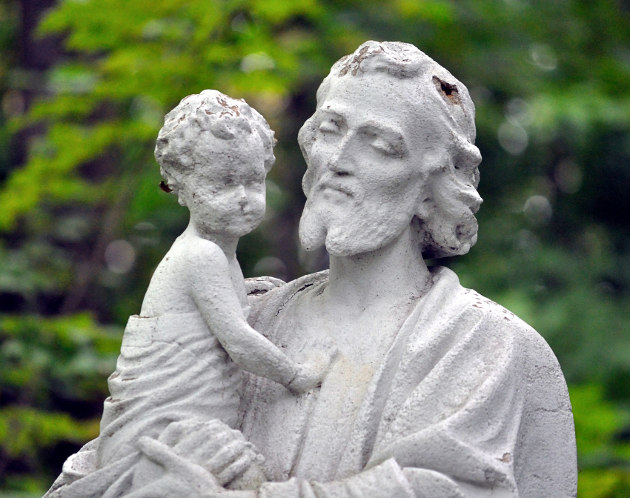
This general rule is especially verified in the case of Saint Joseph, the foster-father of our Lord and the husband of the Queen of our world, enthroned above the angels. He was chosen by the eternal Father as the trustworthy guardian and protector of his greatest treasures, namely, his divine Son and Mary, Joseph’s wife. He carried out this vocation with complete fidelity until at last God called him, saying: “Good and faithful servant enter into the joy of your Lord”.

What then is Joseph’s position in the whole Church of Christ? Is he not a man chosen and set apart? Through him and, yes, under him, Christ was fittingly and honorably introduced into the world. Holy Church in its entirety is indebted to the Virgin Mother because through her it was judged worthy to receive Christ. But after her we undoubtedly owe special gratitude and reverence to Saint Joseph.

In him the Old Testament finds its fitting close. He brought the noble line of patriarchs and prophets to its promised fulfillment. What the divine goodness had offered as a promise to them, he held in his arms.

Obviously, Christ does not now deny to Joseph that intimacy, reverence and very high honor which he gave him on earth, as a son to his father. Rather we must say that in heaven Christ completes and perfects all that he gave at Nazareth.

Now we can see how the last summoning words of the Lord appropriately apply to Saint Joseph: “Enter into the joy of your Lord”. In fact, although the joy of eternal happiness enters into the soul of a man, the Lord preferred to say to Joseph: “Enter into joy”. His intention was that the words should have a hidden spiritual meaning for us. They convey not only that this holy man possesses an inward joy, but also that it surrounds him and engulfs him like an infinite abyss.

Remember us, Saint Joseph, and plead for us to your foster-child. Ask your most holy bride, the Virgin Mary, to look kindly upon us, since she is the mother of him who with the Father and the Holy Spirit lives and reigns eternally. Amen.

Posted in Saints | Tagged , , | Leave a comment

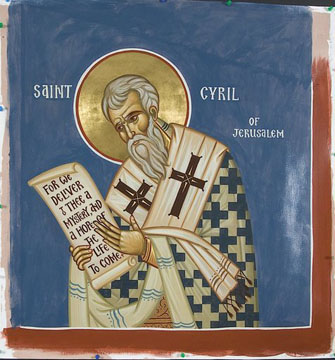
Saint of the Day: St. Cyril of Jerusalem

St. Cyril, who is a Doctor and Father of the Church, is one of my favorite saints.

Cyril, bishop of Jerusalem, was banished from his see on three occasions. With St. Athanasius and others, he belongs to the great champions of faith in the fight against Arianism. Famous as a teacher and preacher, he has left a series of catechetical instructions that constitute a priceless heirloom from Christian antiquity. Of the twenty-four extant discourses, nineteen were directed to catechumens during Lent as a preparation for baptism, while five so-called mystagogical instructions were given during Easter time to make the mysteries of Christianity better known to those already baptized. Continue reading at Catholic Culture.


Posted in Early Church, Saints | Tagged , , | Leave a comment

Samson, “Hey there Delilah”

Heh. H/T. John Bergsma of The Sacred Page.

Posted in Humor | Tagged , | 2 Comments

US Bishops: New Way Ministries is NOT Catholic

WASHINGTON (March 11, 2011)—The chairs of two committees of the USCCB have reaffirmed that New Ways Ministry’s material is not in conformity with the Church.

Read the Bishop’s statement here.

Deacon Fournier has a commentary on New Way Ministries . Excerpt:

Among the notorious dissenters from the clear teaching of the Catholic Church concerning homosexual practice is an organization called “New Ways Ministry”. The group explains its mission on its web site as “a gay-positive ministry of advocacy and justice for lesbian and gay Catholics and reconciliation within the larger Christian and civil communities.”

They have actively and aggressively opposed efforts to defend marriage against attacks by homosexual equivalency activists seeking to redefine it. This is in direct opposition to the formal support of the defense of marriage by the Catholic Church and the crystal clarity of the teaching of the Church. They openly and aggressively foster dissent within the Catholic Church and cause scandal and confusion. They have been publicly and repeatedly reprimanded by the Church. In fact, two of their former leaders, a priest and a religious sister, were ordered to resign their positions with the organization and separate themselves from any involvement with the organization. Among their corrosive efforts is the listing of what they call “gay friendly parishes” and “gay friendly colleges” within the Catholic Church in the United States. Read more here.

Posted in Catholic Church, Heresey and Dissent | Tagged , , , , | 1 Comment